
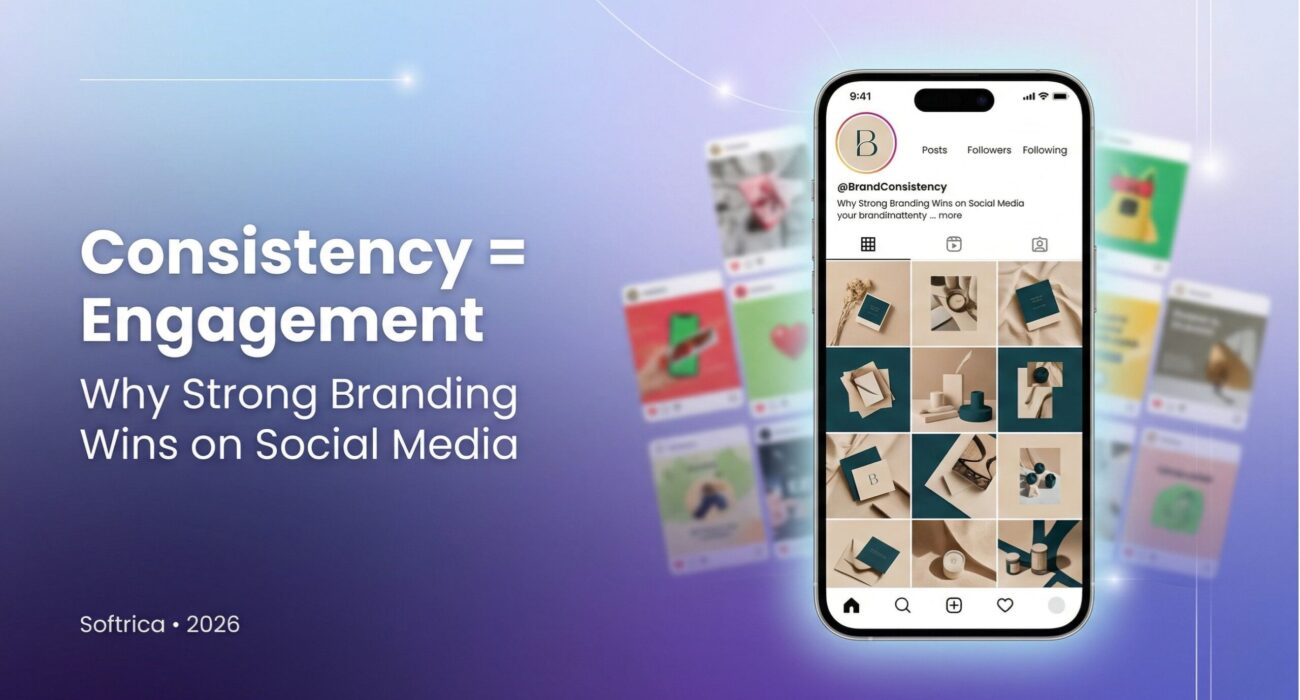
Businesses obsess over posting frequency, hashtags, and trending audio — but the single biggest driver of social media engagement is something most of them ignore completely: brand consistency. Here’s the science and the strategy behind it.
Why the algorithm rewards consistent brands
Instagram, Facebook, and LinkedIn all use engagement signals to decide who sees your content. But engagement doesn’t start with the algorithm — it starts with recognition. When a user scrolls their feed and instantly recognizes your post before reading the caption, they’re more likely to stop, engage, and follow. That recognition is built through consistent brand identity.
A profile with a random mix of styles, fonts, colors, and tones forces the brain to process each post from scratch. A consistent brand profile builds a visual memory — users start to recognize your content instinctively. That recognition translates directly into higher engagement rates.
What “consistent brand identity” actually looks like on social media
Consistency doesn’t mean every post looks identical. It means every post feels like it belongs to the same family. Here are the five elements that create that feeling:
Before and after: what inconsistency costs you
- Every post looks different — no visual memory
- Low profile visits from posts
- High follower drop-off rate
- Ad creative doesn’t match feed — trust gap
- Captions swing between formal and casual
- Customers can’t describe your brand
- Instantly recognizable in any feed
- Higher saves and shares per post
- Followers grow faster and stay longer
- Ads feel like a natural extension of brand
- Voice builds trust over time
- Customers refer you because they remember you
The fastest way to build consistency: a brand guideline document
A brand guideline document (also called a brand kit or style guide) is a single reference document that defines your colors, fonts, logo usage rules, photography style, and tone of voice. It’s what ensures that whether your content is made by your in-house team, a freelancer, or an agency — it all looks and sounds like you.
Most Indian SMEs don’t have one. The ones that do consistently outperform their competitors on social media — not because they post more, but because everything they post reinforces the same brand memory.
Quick audit: Open your Instagram profile and look at your last 12 posts. Could a stranger identify them as belonging to the same brand within 3 seconds? If not, your brand identity needs work before your next post — not your content calendar.
How Softrica builds brand consistency for clients
We start every social media engagement with a brand identity foundation — color palette, typography system, photography guidelines, and a content tone document. Only then do we move to content creation. This is why our clients’ accounts look visually cohesive from day one, and why their engagement rates improve within the first 30 days of working with us.
If your social media presence feels scattered, the fix isn’t more posts. It’s a stronger brand identity behind every post.
Want a brand identity that makes every post instantly recognizable?
Contact Us