
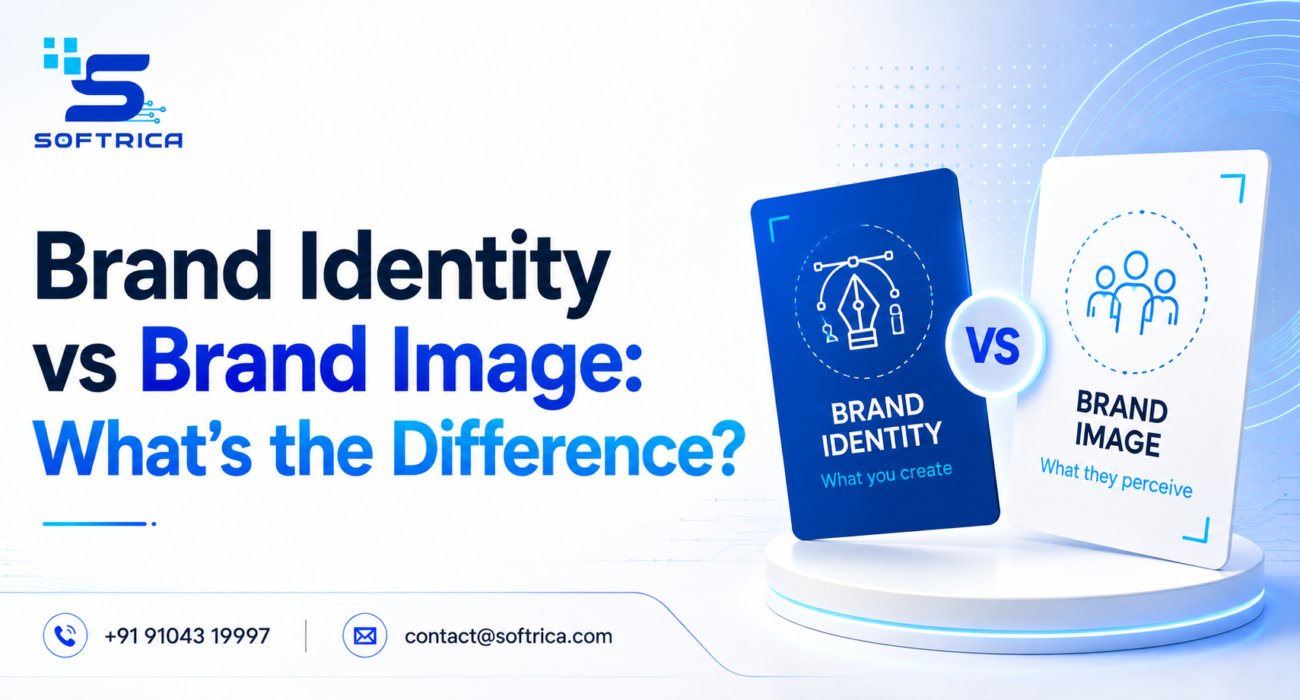
A business can carefully design its logo, choose its colors, define its messaging, and build a strong brand identity. But there is one thing it cannot completely control: how customers actually perceive the brand.
This is the key difference between brand identity vs brand image.
Understanding the difference helps businesses create brands that are not only visually consistent but also trusted, remembered, and valued by their customers.
What Is Brand Identity?
Brand identity is how a business intentionally presents itself to the market.
It is everything a company creates to communicate who it is, what it stands for, and how it wants to be recognized.
Brand identity can include:
- Logo and visual identity
- Brand colors and typography
- Brand voice
- Messaging and positioning
- Brand values
- Website and marketing materials
- Packaging and communication style
For example, a technology company in Surat may want to position itself as innovative, professional, reliable, and future-focused. Its brand identity should consistently communicate these qualities across its website, social media, presentations, and customer communication.
In simple terms:
Brand identity = How you want customers to see your business.
What Is Brand Image?
Brand image is how customers actually perceive your business.
It is formed through every interaction people have with your company, including your products, service, website, advertising, reviews, communication, and customer experience.
For example, a company may want to appear premium and professional, but if its website looks outdated and customer communication is inconsistent, customers may develop a completely different perception.
In simple terms:
Brand image = How customers actually see your business.
Brand Identity vs Brand Image: The Key Difference
The easiest way to understand the difference is:
Brand Identity → Created by the business
Brand Image → Formed in the customer’s mind
A strong brand tries to minimize the gap between these two.
When your identity and image align, customers are more likely to experience your brand as consistent and trustworthy.
Why This Difference Matters for Business Growth
A disconnect between brand identity and brand image can create confusion.
A business may claim to offer premium services, but if its digital presence looks basic, customers may question its value.
Similarly, a company may communicate innovation while delivering an outdated customer experience.
This can affect:
- Customer trust
- Brand recognition
- Perceived value
- Marketing effectiveness
- Customer loyalty
- Business growth
For businesses targeting customers across Surat, India, or international markets, maintaining consistency becomes even more important.
How to Align Brand Identity and Brand Image
Start by understanding how customers currently perceive your business.
Collect customer feedback, review your digital presence, analyze competitors, and identify inconsistencies.
Then align:
Brand Strategy → Visual Identity → Messaging → Website → Marketing → Customer Experience
The goal is not simply to create a better-looking brand.
It is to create a consistent experience that makes the desired brand perception believable.
How Softrica Innovation Can Help
At Softrica Innovation, we believe branding should connect with the complete digital growth journey.
As a Digital Growth, Branding, IT & Digital Transformation Partner, we help businesses strengthen their brand identity while connecting branding with websites, digital marketing, technology, AI, automation, and digital transformation.
Whether you are building a new brand in Surat or preparing an established business for national or international growth, the objective is the same: create a brand that looks consistent, communicates clearly, and delivers an experience customers trust.
Your brand identity is what you build.
Your brand image is what customers remember.
The strongest brands make sure the two tell the same story.
Frequently Asked Questions
What is the difference between brand identity and brand image?
Brand identity is how a business intentionally presents itself, while brand image is how customers actually perceive and remember the business.
Can a business control its brand image?
Not completely. Businesses can influence brand image through consistent branding, quality, communication, customer experience, and reputation.
Why is brand identity important?
A strong brand identity helps businesses communicate their values, positioning, personality, and unique value consistently across customer touchpoints.
How can businesses improve their brand image?
Businesses can improve brand image by understanding customer perceptions, fixing inconsistencies, improving customer experience, and ensuring their branding matches the quality they promise.