
Building a business today means navigating an increasingly competitive digital landscape—one where your customers are online, your competitors are visible, and standing out requires more than a basic website or occasional social media post.
Yet despite significant investment in digital tools and platforms, many businesses struggle to generate consistent leads, attract the right audience, or build the kind of brand recognition that translates into long-term growth.
The gap between businesses that scale effectively online and those that don’t rarely comes down to budget. It comes down to strategy.
In this article, we outline the core components of a digital marketing strategy designed to generate leads, build brand awareness, and drive sustainable business growth—the same framework used by Softrica to help companies across multiple industries.
Why Most Digital Marketing Efforts Fall Short
Before discussing solutions, it is important to understand why so many businesses invest in digital marketing without seeing meaningful returns. The most common mistakes include:
Treating tactics as strategy.
Running ads, posting on social media, or updating a website are tactics. Without a clear strategy connecting these activities to defined business outcomes, they rarely produce consistent results.
Ignoring the customer journey.
Effective digital marketing guides potential customers through a clear journey—from awareness to consideration to conversion. Campaigns that focus only on visibility, without conversion infrastructure in place, generate traffic without leads.
Underinvesting in brand credibility.
Modern consumers research businesses online before contacting them. Businesses with a weak or inconsistent brand presence lose potential customers before a conversation even begins.
Failing to optimize continuously.
Digital marketing is not a set-and-forget activity. The most effective campaigns are built on continuous data analysis and iterative improvement.
The Components of an Effective Digital Marketing Strategy
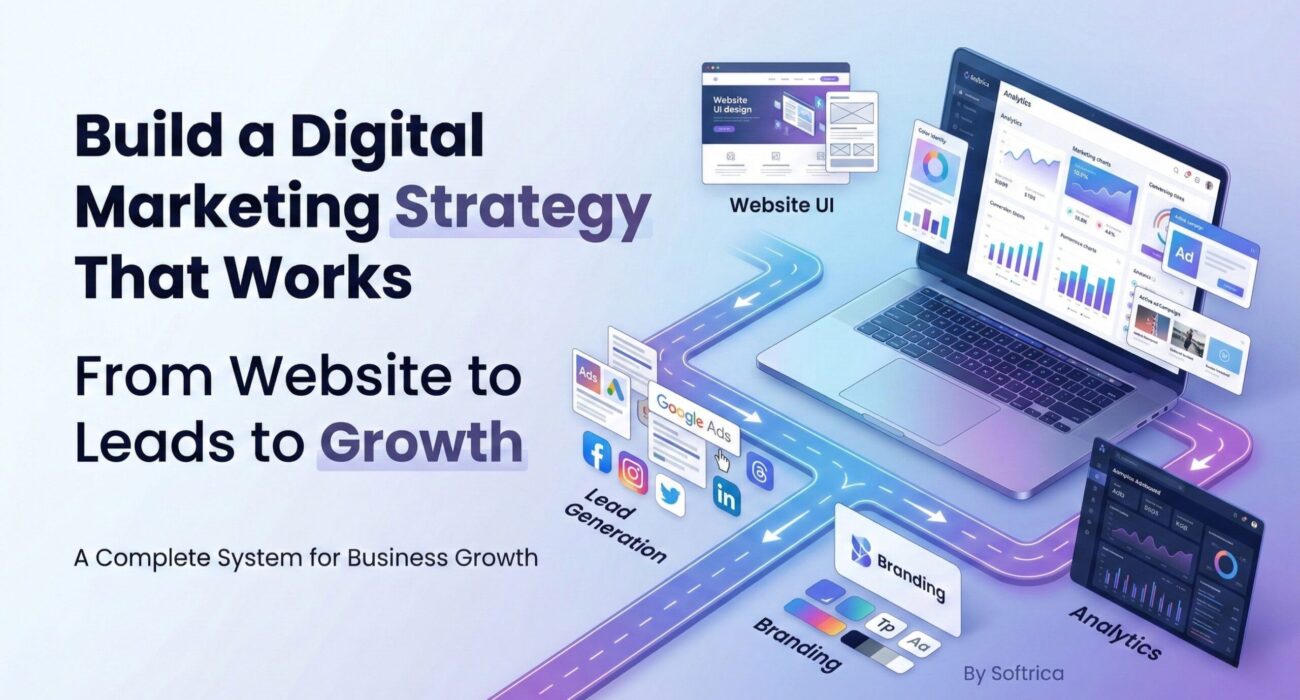
A high-performing digital marketing strategy integrates multiple elements into a cohesive, data-driven system. Here are the core components every business should have in place.
1. A High-Converting Business Website
Your website is the central hub of your digital presence. A high-converting website builds trust, communicates value clearly, and guides visitors toward taking action—whether submitting an enquiry, requesting a consultation, or making a purchase. Key elements include:
- Professional design that reflects your brand identity
- Clear messaging that communicates who you serve and how you help
- Fast loading speed and full mobile optimization
- Strong calls-to-action on every key page
- Landing pages specifically designed to support advertising campaigns
- Contact forms, lead capture tools, and enquiry pathways
2. Targeted Lead Generation Campaigns
Attracting qualified leads requires targeted, well-structured marketing campaigns. Effective lead generation strategies typically include:
Social Media Marketing:
Platforms such as LinkedIn, Instagram, and Facebook allow businesses to reach highly specific audience segments based on demographics, interests, and behaviour.
Paid Advertising:
Search and display advertising campaigns, when properly managed, can deliver a significant return on investment by placing your business in front of prospects at the exact moment they are searching.
Marketing Automation:
Lead nurturing systems ensure that prospects who express interest but are not yet ready to buy remain engaged over time—dramatically improving conversion rates.
Content Marketing and SEO:
Long-form content builds organic visibility over time by ranking for search terms your target audience is actively using—creating a compounding return on your content investment.
3. Brand Building and Online Reputation
In competitive markets, the businesses that consistently win are those that are most trusted. Brand building in a digital context involves clear brand positioning, a coherent visual identity, active reputation management, and thought leadership content that demonstrates your expertise.
4. Data-Driven Performance Optimisation
The most effective digital marketing strategies are built on continuous measurement and improvement. This means tracking key metrics—website traffic, lead volume, conversion rates, cost per acquisition, and return on ad spend—and using that data to make informed investment decisions.
How Softrica Helps Businesses Build Digital Growth Systems
Softrica is a digital marketing and technology company that has spent five years helping businesses across fashion, jewellery, hospitality, manufacturing, retail, and startups build structured, results-driven digital growth systems.
Founded by Soni Yadav, Softrica takes a comprehensive approach—combining website development, targeted marketing campaigns, brand strategy, lead generation systems, and continuous performance optimization into an integrated framework.
Industries served include:
- Fashion and apparel brands
- Jewellery businesses
- Hospitality and hotel businesses
- Manufacturing companies
- Startups and entrepreneurs
- Retail and local businesses
Conclusion: Digital Strategy Is a Business Investment
In an era where customers research, compare, and evaluate businesses online before making any purchasing decision, a strong digital presence is foundational to business growth.
Businesses that invest in structured digital marketing strategies consistently outperform those that treat digital marketing as an afterthought.
Visit www.softrica.com to learn how Softrica can support your business growth journey.